
Tarot Card Meanings Made Clear for Beginners
Learn how to understand tarot card meanings through traditional symbolism, spread positions, imagery, and intuition. This beginner-friendly guide shows you how to read the Major and Minor Arcana, work with reversals, and turn each reading into grounded guidance.
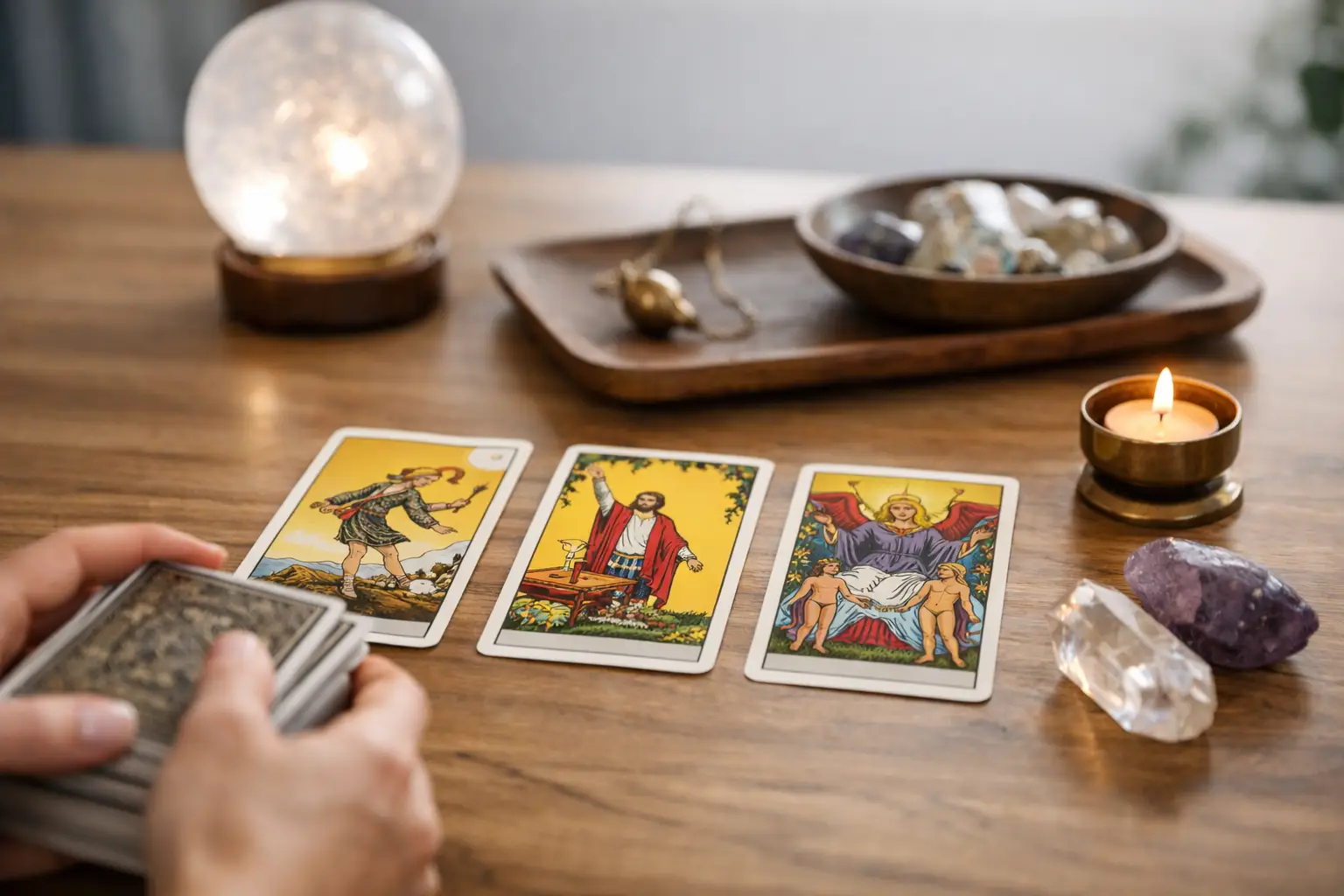
A tarot card can feel startlingly personal when it lands faceup. The Lovers may appear as you question a relationship. The Eight of Pentacles may arrive during a demanding season at work. Tarot card meanings give you a language for recognizing the energy already moving through your life, so you can meet it with greater clarity instead of reacting on autopilot.
A deck does not hand you one fixed answer. Each card carries an enduring symbolic message, yet its role shifts with your question, the cards around it, and the truth you are ready to face. Learning tarot is less about memorizing 78 definitions and more about building a relationship with its images, patterns, and invitations.
How Tarot Card Meanings Work
Every tarot reading brings together three layers: the traditional meaning of the card, its position in the spread, and your present circumstances. The traditional meaning gives you a reliable foundation. The spread position tells you where that energy is showing up. Your intuition helps you recognize the personal detail that makes the message useful.
For example, the Three of Swords traditionally speaks to heartbreak, grief, or a difficult truth. In a position representing the past, it may show the emotional wound still shaping your choices. In a position representing advice, it can ask you to stop minimizing what hurt and give yourself room to grieve honestly. The card is not a punishment or a promise that pain is coming. It names an emotional reality that deserves your care.
This is why context matters. The same card can speak differently in a love reading, a career reading, or a question about your inner growth. Tarot offers celestial wisdom in symbolic form: a way to notice the larger pattern while staying close to the decision in front of you.
The Major Arcana: Life-Changing Themes
The 22 Major Arcana cards point to significant inner shifts, turning points, and lessons of personal evolution. When one appears, pay attention to the deeper theme beneath the immediate event. You may be standing at a threshold, releasing an old identity, or being asked to trust a new direction.
The Fool begins the journey. It carries openness, possibility, and the courage to take a step before every detail is known. It can be a welcome sign when you have outgrown hesitation, but it also asks you to bring awareness along with your optimism.
The Magician speaks to agency. It reminds you that your skills, voice, resources, and focus can shape what happens next. If you have been waiting for perfect circumstances, this card encourages you to work with what is already in your hands.
The High Priestess turns your attention inward. Her appearance often asks for quiet, patience, and respect for what has not yet been revealed. Not every question needs immediate action. Sometimes your next step is to listen more carefully to your instincts and let hidden information surface.
Death is one of the most misunderstood cards. It rarely points to a literal ending. More often, it marks a necessary release: an attachment, role, habit, relationship dynamic, or version of yourself that cannot travel with you into the next chapter. Its message can be tender and challenging at once. Letting go may ache, but it creates space for renewal.
The World speaks to completion, integration, and a fuller sense of belonging in your own life. It may arrive after a long cycle of effort, inviting you to acknowledge how far you have come before rushing toward another goal.
The Minor Arcana: Your Everyday Energy
The 56 Minor Arcana cards bring tarot into the rhythms of ordinary life. They describe emotions, conversations, practical pressures, desires, and the small choices that gradually shape your path. Each suit is connected to an elemental force:
- Wands carry fire energy. They speak to passion, creativity, courage, ambition, and momentum.
- Cups carry water energy. They explore feelings, relationships, intuition, healing, and connection.
- Swords carry air energy. They reveal thoughts, communication, conflict, perspective, and truth.
- Pentacles carry earth energy. They relate to work, money, health, home, security, and tangible progress.
Explore the symbolism of each suit in this guide to the four tarot suits.
The numbered cards show how each element develops. Aces are seeds and openings. Twos often bring choices or balance. Fives tend to reveal disruption, tension, or change. Tens show a point of fullness, which can feel like completion, abundance, overwhelm, or all three depending on the suit.
Court cards—Pages, Knights, Queens, and Kings—can represent people, parts of your personality, or a style of energy needed in the moment. The Page of Cups may reflect a sensitive person offering a heartfelt message, or it may ask you to approach your feelings with fresh curiosity. The Queen of Pentacles can describe someone nurturing and grounded, or invite you to create more stability in your own home, body, and finances.
Read the Image Before Reaching for a Guidebook
Traditional tarot card meanings are valuable, especially when you are learning. Still, pause with the artwork before checking a guidebook. Notice the colors, posture, weather, objects, facial expressions, and direction of movement. A figure looking away may suggest avoidance. A bright horizon may show hope after difficulty. A tightly held coin can speak to wise protection or fear of loss.
Ask yourself: What is happening in this image? What emotion does it bring forward? Where have I felt this energy lately? These questions help you move from memorized keywords into a reading that feels alive and relevant.
If your first impression differs slightly from the guidebook, do not dismiss it. Let the traditional meaning anchor you, then allow the image and the question to refine it. The Seven of Cups is often associated with options, fantasy, and confusion. If it appears while you are considering a job offer, you might recognize that you are seeing only the exciting possibilities and need to investigate the practical details. If it appears in a relationship reading, it may ask whether hope is being supported by reality.
What Reversed Cards Can Tell You
A reversed card appears upside down in the spread. Some readers use reversals, while others read every card upright. Neither approach is more spiritually valid. If reversals feel overwhelming at first, learn the upright meanings well and add them later.
When you do work with reversals, avoid treating them as simple opposites. A reversed card can suggest energy that is internal, delayed, blocked, resisted, excessive, or ready to be reconsidered. The reversed Eight of Wands, for instance, might point to delayed communication, scattered momentum, or a need to slow down before making a rushed move.
The surrounding cards will help you understand which message fits. A reversal is a prompt to look more closely, not a reason to panic.
A Simple Way to Read Any Spread
Before you shuffle, make your tarot question clear enough to invite reflection. Instead of asking, “Will everything work out?” try, “What energy should I understand around this career decision?” or “What can help me communicate more honestly in this relationship?” Open questions give tarot room to offer guidance rather than forcing it into a yes-or-no prediction.
As you lay out the cards, begin with the broad emotional atmosphere. Are there many Cups, suggesting feelings and connection? Do Swords dominate, bringing mental strain or a needed conversation to the surface? Several Major Arcana cards may indicate a meaningful period of change, while a spread filled with Pentacles can point to practical concerns that need steady attention.
Then read the cards as a story. One card may show the challenge, another the belief keeping it in place, and another the next grounded step. If you are ready to practice with a simple layout, explore these easy tarot spreads for beginners. Do not pressure yourself to interpret every detail immediately. Write down what you notice, return to the reading after a day or two, and see what becomes clearer through lived experience.
Let Tarot Support Your Next Step
The most helpful readings do not leave you waiting for fate to decide your life. They help you recognize where you have choice, where patience is needed, and what emotional truth wants your attention. If the Hermit appears, create space for honest reflection before seeking everyone else’s opinion. If the Strength card appears, meet a tense situation with calm self-respect rather than force. If the Ace of Pentacles appears, honor the small practical opportunity that could grow with care.
Over time, tarot becomes less about finding the perfect meaning and more about learning to hear yourself with compassion. Let each card be a mirror, a messenger, and a moment of pause as you navigate life with greater clarity.