
The Four Tarot Suits and Their Meanings
A beginner-friendly guide to Wands, Cups, Swords, and Pentacles, including their elements, themes, court cards, and meanings in a spread.
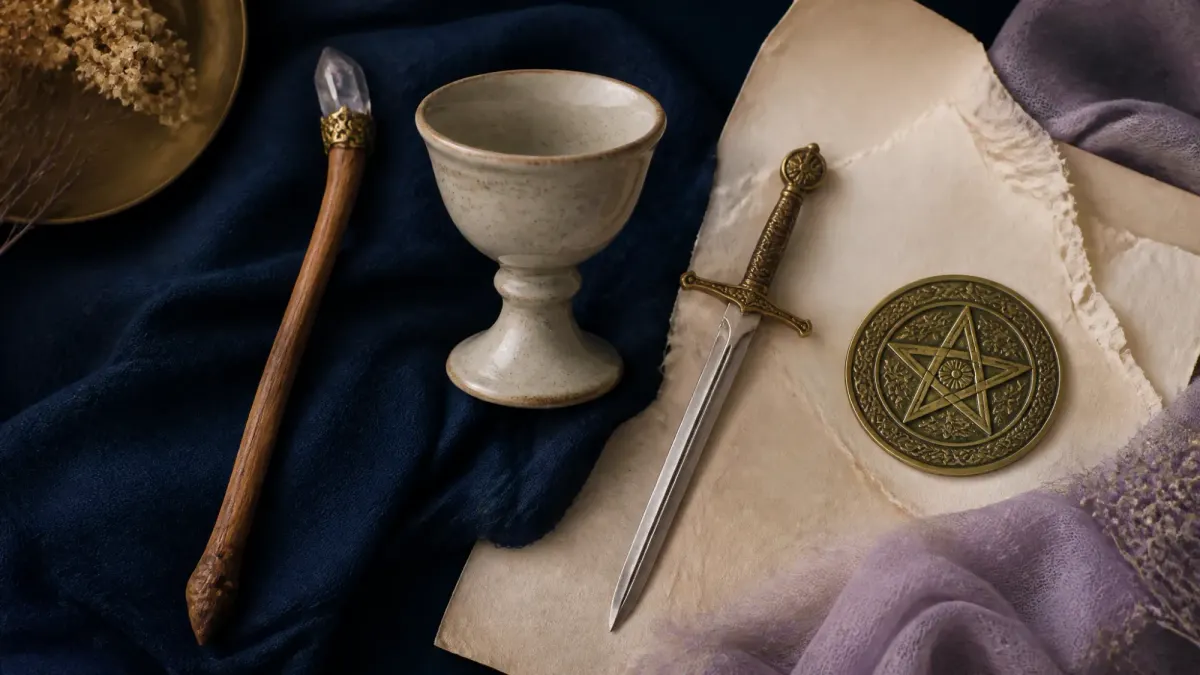
The four tarot suits—Wands, Cups, Swords, and Pentacles—organize the 56 Minor Arcana cards into four familiar areas of life. Wands often describe action and creativity, Cups emotions and relationships, Swords thought and communication, and Pentacles work, resources, and the physical world.
Each suit contains 14 cards: an Ace, cards Two through Ten, and four court cards—the Page, Knight, Queen, and King. Learning the basic character of each suit makes it easier to interpret these cards without memorizing 56 separate definitions.
Suit meanings are starting points, not rigid rules. The number, court figure, artwork, question, surrounding cards, and spread position all help shape a card’s meaning.
The four tarot suits at a glance
- Wands — fire: energy, creativity, motivation, and action. Challenging expressions can include burnout, impatience, or scattered effort.
- Cups — water: feelings, relationships, imagination, and intuition. Challenging expressions can include avoidance, idealization, or unclear boundaries.
- Swords — air: thought, communication, truth, and decisions. Challenging expressions can include conflict, anxiety, or harsh judgment.
- Pentacles — earth: work, money, health, resources, and routines. Challenging expressions can include scarcity, stagnation, or overwork.
These elemental associations are common in modern tarot, although names and correspondences can vary between decks and traditions. Pentacles may also be called Coins or Disks, while Wands may appear as Rods, Batons, or Staves.
Wands: energy, creativity, and action
The Suit of Wands is associated with fire. It explores inspiration, ambition, confidence, enterprise, and the energy needed to begin or pursue something.
A supportive Wand card may point to enthusiasm, courage, creative momentum, or an opportunity to act. A challenging Wand card can suggest impatience, competition, exhaustion, or energy moving in too many directions.
When Wands appear, ask: Where is my energy going, and what genuinely motivates me?
Cups: emotions, relationships, and intuition
The Suit of Cups is associated with water. Cups explore feelings, intimacy, imagination, intuition, and the ways people connect with one another.
Supportive Cup cards can describe empathy, belonging, emotional openness, and meaningful relationships. Their more difficult expressions may involve avoidance, idealization, disappointment, or boundaries that need attention.
Cups do not only represent romantic love. They can refer to friendships, family relationships, creativity, emotional needs, or a person’s relationship with themselves.
When Cups appear, ask: What am I feeling, and how is that feeling shaping my response?
Swords: thought, truth, and communication
The Suit of Swords is associated with air. Swords relate to language, perception, truth, decisions, boundaries, and mental tension.
They do not automatically predict arguments or misfortune. A Sword card may simply call for clarity, a difficult conversation, a carefully considered choice, or a more precise boundary.
Supportive Swords can represent insight, honesty, and clear communication. Challenging Swords may reflect anxiety, confusion, harsh judgment, or conflict between competing ideas.
When Swords appear, ask: What needs to be understood, decided, or communicated clearly?
Pentacles: work, resources, and practical life
The Suit of Pentacles is associated with earth. Pentacles concern money, work, skills, health routines, home, the body, and the practical structures that support daily life.
Supportive Pentacle cards often suggest steady progress, reliability, craftsmanship, or sustainable support. Their challenging expressions may draw attention to scarcity, stagnation, overwork, or habits that are no longer sustainable.
Pentacles are not only about wealth. They can describe anything tangible that requires care, time, and consistent effort.
When Pentacles appear, ask: What practical step would create greater stability or support?
How numbers and court cards change a suit
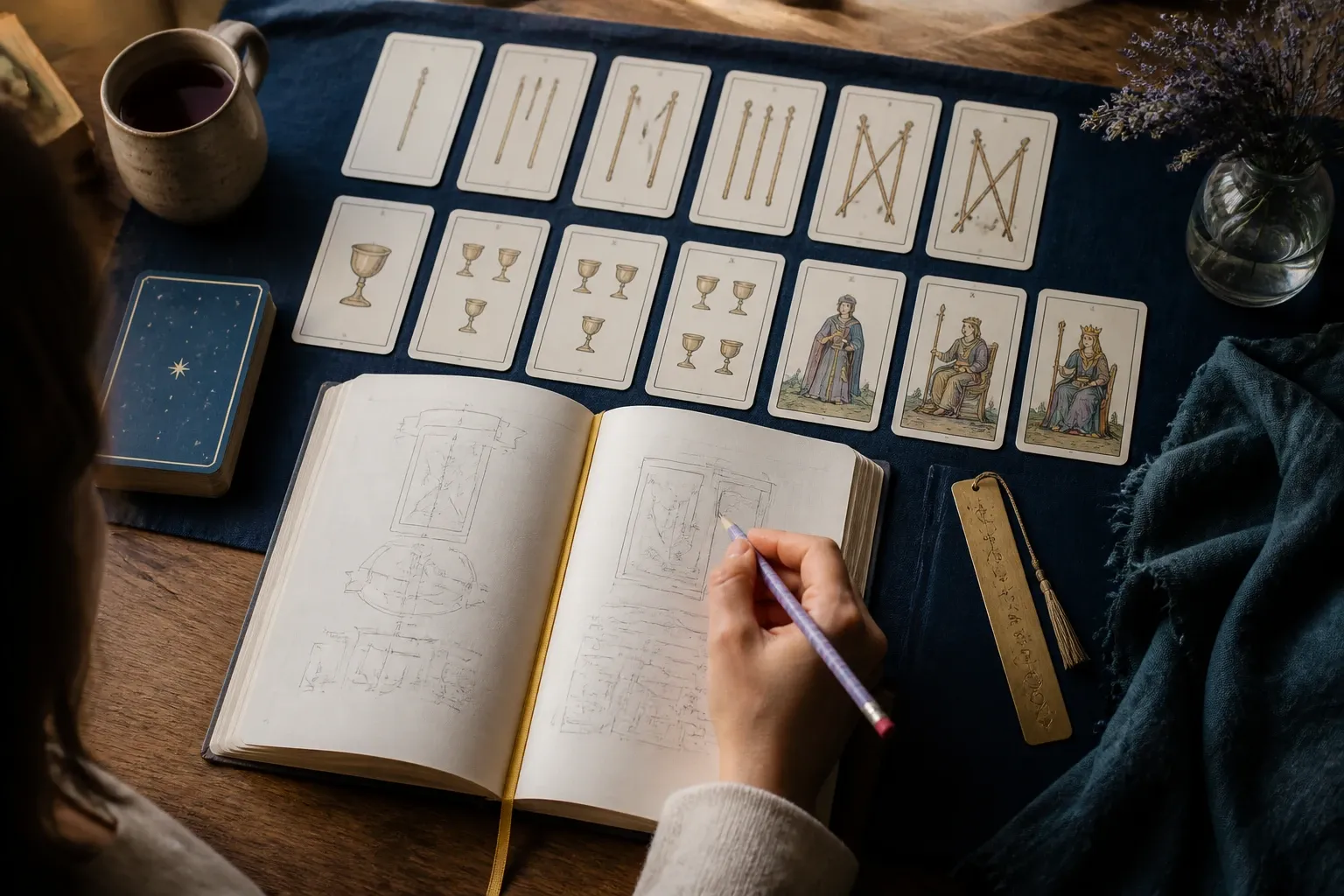
The suit identifies the area of experience, while the number or court figure helps show how that energy is developing.
- Aces introduce potential, beginnings, or an emerging opportunity.
- Twos through Fours often explore choices, relationships, and early structure.
- Fives through Sevens may introduce disruption, testing, adjustment, or reflection.
- Eights and Nines can show development, movement, skill, or approaching completion.
- Tens often bring the suit’s themes to a consequence, culmination, or transition.
Court cards can represent people, roles, approaches, or developmental stages. A Page may approach the suit with curiosity, a Knight through active pursuit, a Queen through inward understanding, and a King through outward direction or responsibility.
These are flexible patterns rather than fixed formulas. Always return to the card’s imagery and its position in the spread.
What reversed suit cards can mean
A reversed card does not have to mean the exact opposite of its upright meaning. It may show that the suit’s energy is:
- Internalized or difficult to express
- Delayed, blocked, or avoided
- Excessive or out of balance
- Being reconsidered privately
For example, a reversed Wand might suggest depleted motivation rather than a complete absence of creativity. A reversed Cup could point to feelings that have not yet been acknowledged.
How to read suit patterns in a spread
Begin by reading every card in its individual position. Then step back and look for patterns across the spread.
- Many Wands may emphasize action, ambition, creative momentum, or depleted energy.
- Many Cups may highlight emotional needs, intuition, or relationship dynamics.
- Many Swords may show a decision, important conversation, mental load, or need for clarity.
- Many Pentacles may focus attention on work, money, health, home, or practical conditions.
- A missing suit can suggest a perspective worth consciously considering.
For example, a spread filled with Cups and Swords but no Pentacles might contain plenty of feelings and analysis while offering little attention to practical next steps.
Use suit patterns as supporting evidence, not as a replacement for reading each card in context. The Tarot for Beginners guide can help you combine suits with the Major Arcana, card positions, and simple spreads.
Frequently asked questions
What are the four suits in tarot?
The four suits are Wands, Cups, Swords, and Pentacles. Together they contain the 56 cards of the Minor Arcana.
Which tarot suit represents love?
Cups are most closely associated with emotions, intimacy, and relationships. However, relationship questions can involve every suit: Wands may describe attraction, Swords communication, and Pentacles long-term stability.
Which tarot suit represents money?
Pentacles are commonly connected with money, work, resources, property, skills, and material security.
Do all tarot decks use the same suit names?
No. Some decks use Coins or Disks instead of Pentacles and Rods, Batons, or Staves instead of Wands. Always check the guidebook supplied with your deck.
A grounded approach to interpretation
Tarot is a reflective practice, not a source of certainty. Use the cards alongside your judgment, context, and lived experience. A reading cannot replace medical, legal, financial, mental-health, or other professional advice.
Keep learning with Astrological Insights
Explore the tarot learning hub or continue with Tarot for Beginners for a clear path through cards, spreads, and reflective reading.
Join the free weekly newsletter for one practical astrology note, one tarot reflection prompt, and the newest beginner guide.