
Astrology for Beginners: Birth Charts, Signs and Houses
A beginner-friendly astrology hub covering birth charts, zodiac signs, planets, houses, aspects, rising signs, and step-by-step chart reading.
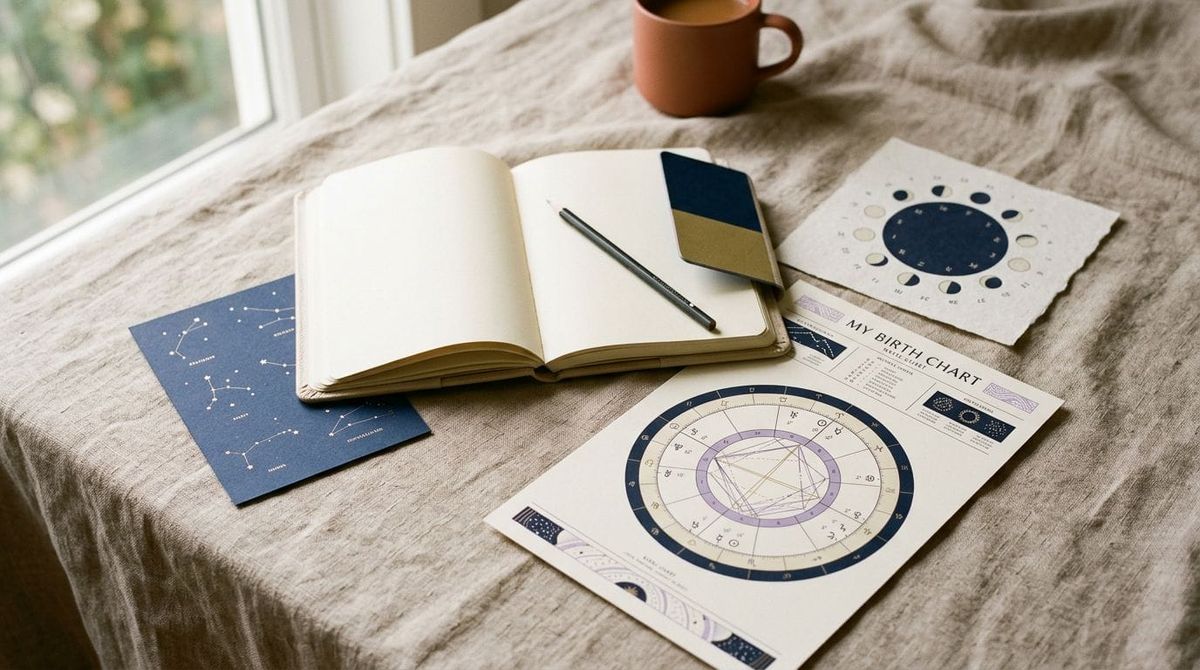
Astrology can feel like a new language: twelve zodiac signs, ten planets, twelve houses, angles, aspects, symbols, and unfamiliar vocabulary all appear at once. The good news is that you do not need to memorize everything before you can begin.
This astrology for beginners guide is your starting point and learning hub. It explains how a birth chart is organized, what each building block contributes, and which guide to read next. Move through it in order, or use the links to follow the question that interests you most.
Quick start: If you already have your birth date, exact birth time, and birthplace, begin with our beginner’s guide to reading a birth chart. If you do not know your birth time, you can still learn about many planetary signs, but your Rising sign and house placements may be uncertain.
What is astrology?
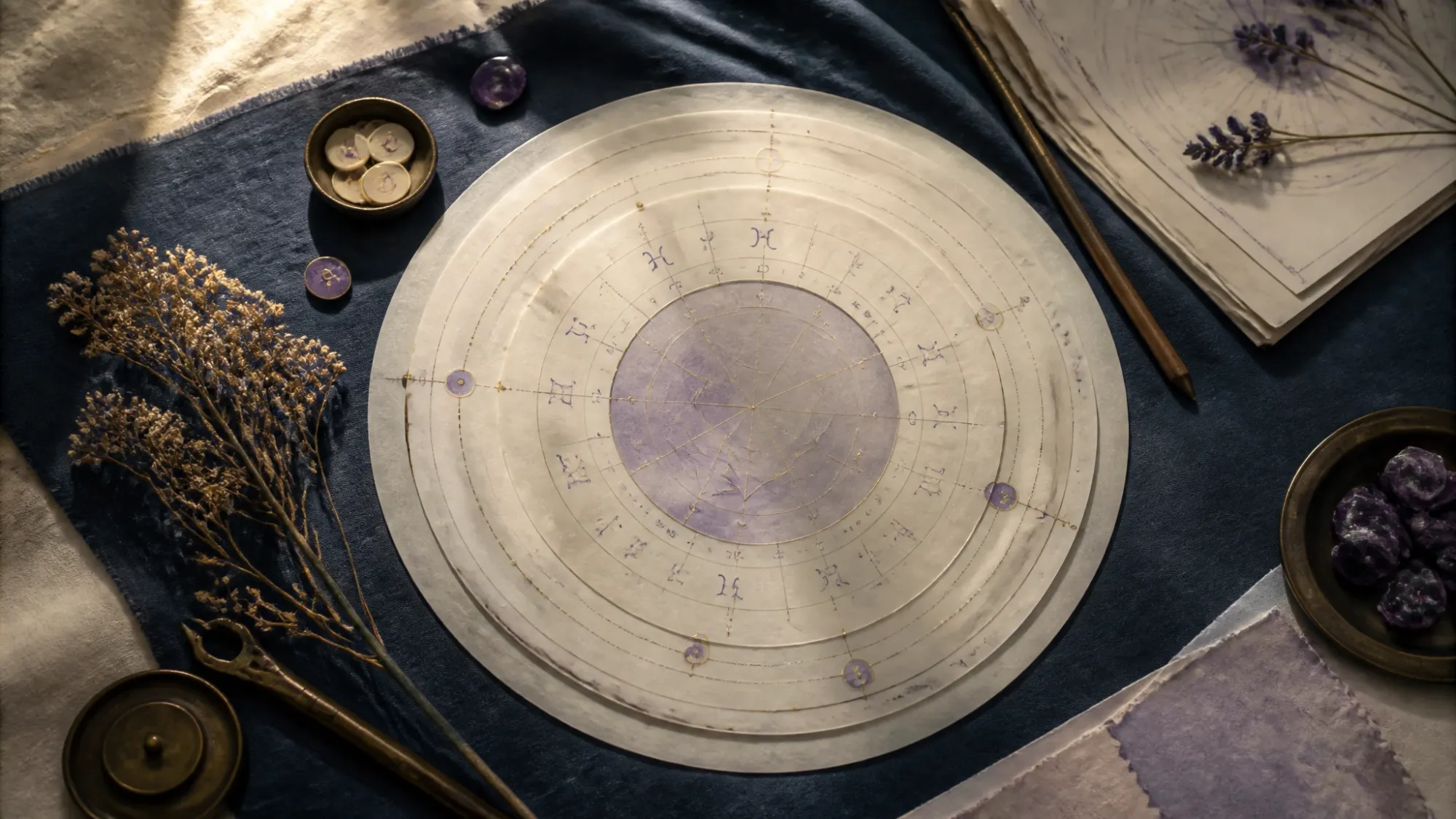
Astrology is a symbolic system that studies the positions of the Sun, Moon, and planets in relation to the zodiac. A natal chart, also called a birth chart, records that pattern for a particular time and place. Astrologers interpret the chart as a set of themes: ways of describing temperament, needs, habits, relationships, tensions, and possibilities.
A chart is not a verdict about who you must become. It is more useful as a reflective map than as a fixed prediction. The same placement can be expressed in many ways depending on context, maturity, culture, and choice. Astrology is also not a science or a substitute for medical, legal, financial, or mental-health advice.
The four building blocks of a birth chart
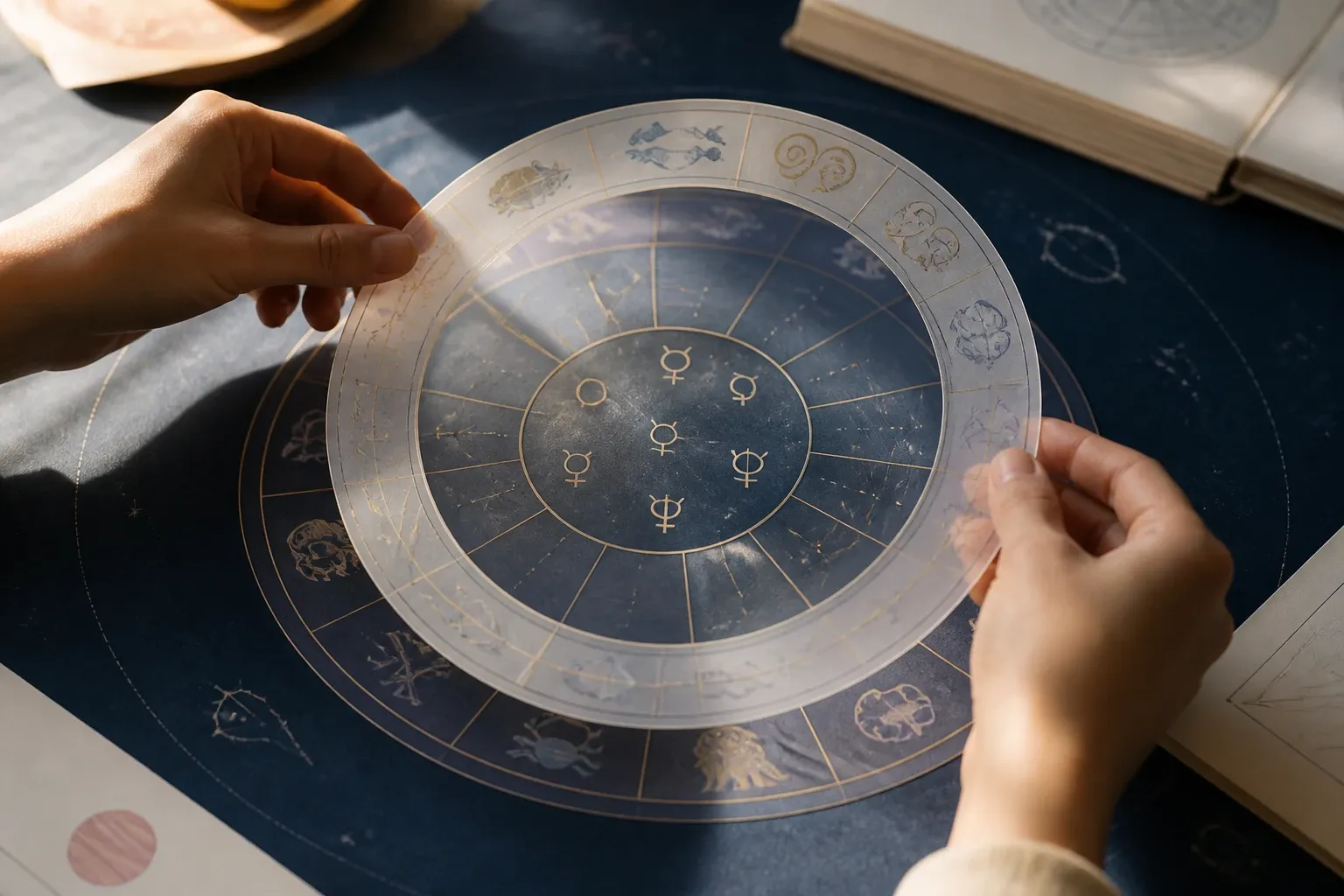
Most chart interpretation becomes much easier when you separate four questions:
- Planets show what is happening. The Sun relates to identity and vitality, the Moon to emotional needs, Mercury to communication, Venus to values and connection, and Mars to drive and assertion. The outer planets add slower-moving collective and generational themes.
- Zodiac signs show how a planet acts. A sign gives a planet its style, tone, and preferred way of expressing itself.
- Houses show where the theme appears. The twelve houses describe areas of life such as self, resources, communication, home, creativity, work, partnership, shared resources, belief, vocation, community, and retreat.
- Aspects show how the parts interact. The geometric relationships between planets describe ease, tension, reinforcement, and adjustment within the chart.
A simple interpretation formula is planet + sign + house + aspects. For example, Mars describes motivation; its sign describes how that motivation moves; its house shows where it is likely to be noticeable; and its aspects reveal which other parts of the chart support or complicate it.
Start with the Sun, Moon, and Rising sign
The “Big Three” offer a manageable first portrait of the chart. They are important, but they are not the whole personality.
Sun sign: identity and direction
Your Sun sign describes the qualities you are learning to embody with confidence. It can speak to vitality, purpose, and the style through which you develop a stable sense of self. This is the sign most people mean when they ask, “What is your sign?”
Moon sign: needs and emotional rhythm
Your Moon sign describes instinctive responses, emotional nourishment, memory, and the conditions that help you feel secure. It can be less visible to others than the Sun, yet deeply familiar in private life and close relationships.
Rising sign: approach and first impression
Your Rising sign, or Ascendant, is the sign on the eastern horizon at your birth. It describes how you meet new situations and shapes the house structure of the chart. Because it changes quickly, an accurate birth time matters. Explore our complete guide to Rising sign meaning when you are ready to understand the Ascendant in more depth.
Zodiac signs: the style of expression
Each zodiac sign combines an element and a modality. The four elements describe broad temperaments:
- Fire signs — Aries, Leo, and Sagittarius — tend to emphasize initiative, inspiration, and direct experience.
- Earth signs — Taurus, Virgo, and Capricorn — tend to emphasize practicality, stability, and tangible results.
- Air signs — Gemini, Libra, and Aquarius — tend to emphasize ideas, exchange, and social perspective.
- Water signs — Cancer, Scorpio, and Pisces — tend to emphasize feeling, intuition, and emotional connection.
The three modalities describe how signs move: cardinal signs initiate, fixed signs sustain, and mutable signs adapt. Combining element and modality helps explain why signs within the same element still behave differently. Aries and Leo are both fire signs, for example, but Aries initiates while Leo stabilizes and develops.
A planet in a sign is never automatically “good” or “bad.” Look for the needs, strengths, habits, and possible extremes of the combination.
The twelve houses: where life happens
The houses turn abstract symbolism into lived areas of experience. Use this quick map as an orientation, then visit our detailed guide to the twelve houses in astrology.
- First house: identity, embodiment, approach, and first impressions.
- Second house: values, money, possessions, skills, and self-worth.
- Third house: learning, communication, siblings, and the local environment.
- Fourth house: home, family, roots, privacy, and belonging.
- Fifth house: creativity, pleasure, play, romance, and self-expression.
- Sixth house: routines, service, work habits, health practices, and maintenance.
- Seventh house: partnership, commitment, collaboration, and projection.
- Eighth house: intimacy, shared resources, loss, trust, and transformation.
- Ninth house: belief, higher learning, travel, meaning, and worldview.
- Tenth house: vocation, reputation, responsibility, and public contribution.
- Eleventh house: friendship, community, networks, and collective hopes.
- Twelfth house: rest, retreat, the unconscious, endings, and spiritual life.
A house does not mean that one topic will dominate your life. It identifies a field where a planet’s symbolism may become especially visible. An “empty” house is not missing or inactive; its ruling planet and current transits can still activate its themes.
Astrology aspects: how the chart becomes a conversation
Aspects are the angular relationships between planets. They show how different drives cooperate, intensify, or pull in competing directions.
- Conjunction: two planetary themes merge and act together.
- Opposition: two themes seek balance across a polarity.
- Square: friction creates pressure, action, and development.
- Trine: energy flows with relative ease and may feel natural.
- Sextile: a supportive possibility grows through participation and choice.
No single aspect decides the meaning of a chart. A square is not a punishment, and a trine is not a guarantee. Both can describe resources as well as blind spots. Read Astrology Aspects Explained for Beginners for orbs, aspect patterns, and practical examples.
How to read a birth chart step by step
Trying to interpret every symbol at once usually creates more confusion than insight. Use this sequence instead:
- Confirm the chart data. Check the birth date, location, time zone, and exact birth time. A small time difference can change the angles or house cusps.
- Read the Big Three. Describe the Sun, Moon, and Rising sign separately before combining them. Notice harmony, contrast, and repeated elements.
- Add the personal planets. Mercury, Venus, and Mars give detail to communication, values, relationships, desire, and action.
- Find the house placements. Ask where each planetary theme tends to show up in everyday life.
- Study the strongest aspects. Begin with close conjunctions, oppositions, squares, trines, and sextiles involving personal planets or angles.
- Look for repetition. Repeated signs, houses, elements, modalities, or themes often matter more than an isolated placement.
- Synthesize in plain language. Write two or three sentences about the pattern instead of collecting disconnected keywords.
For a guided walkthrough, use How to Read Your Birth Chart. When you want to move beyond keywords, continue with our personal guide to birth chart interpretation.
A simple example of chart synthesis
Imagine someone with Mercury in Taurus in the tenth house, forming a square to Saturn. Mercury describes thinking and communication. Taurus adds a deliberate, concrete style. The tenth house places the theme in public work, reputation, or responsibility. Saturn may introduce caution, discipline, self-editing, or a fear of being judged.
A flat interpretation might call this “slow communication.” A fuller reading could say: You may prefer to speak after careful consideration, especially in professional settings. High standards can make your voice precise and reliable, although learning to share work before it feels perfect may be an important part of your growth.
That synthesis leaves room for agency. It names both a resource and a possible tension without turning the placement into a fixed prediction.
How to learn astrology without getting overwhelmed
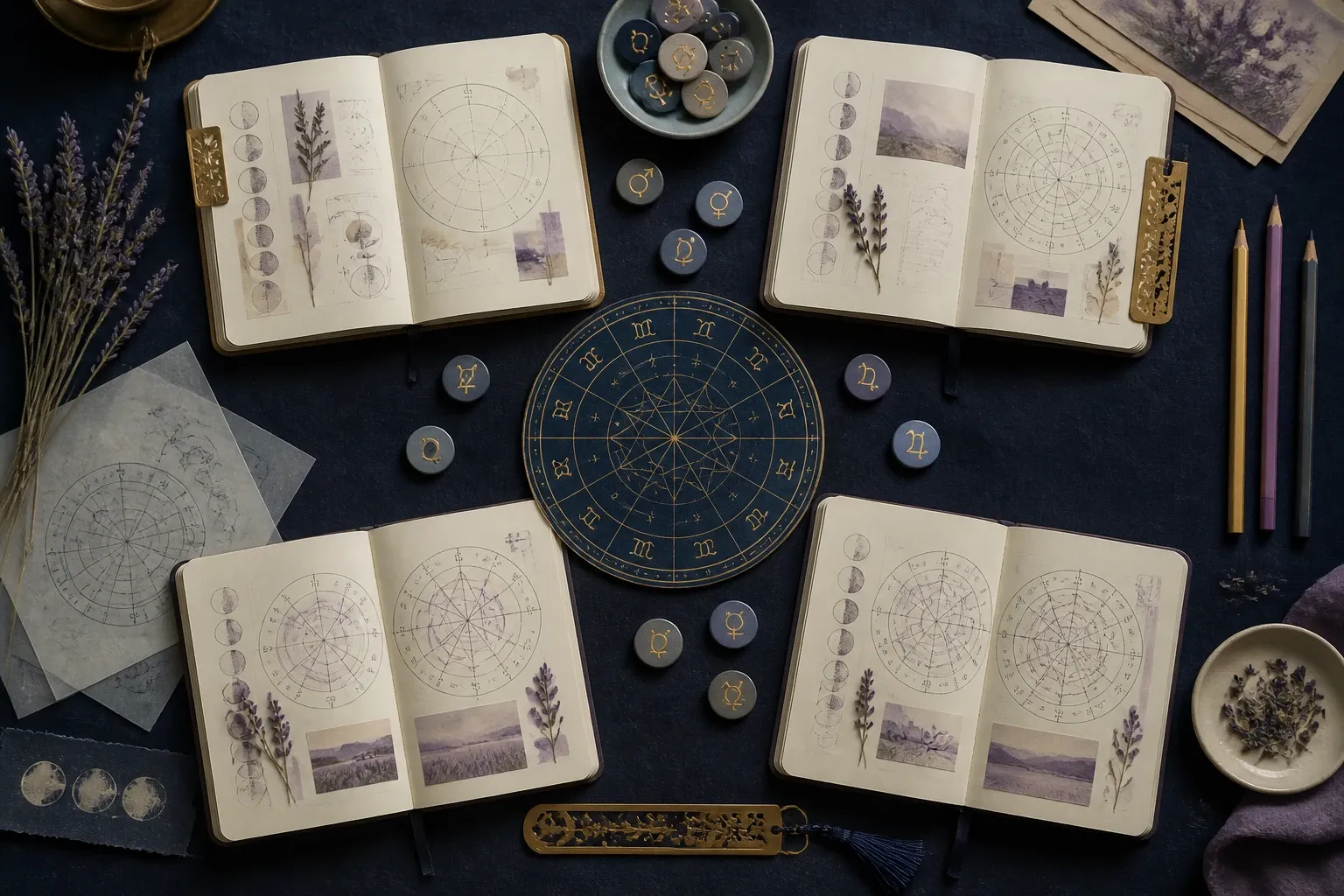
Consistency is more useful than speed. You can build a strong foundation in four weeks:
- Week one: learn the elements and modalities, then write three keywords for each sign in your own language.
- Week two: study the Sun, Moon, Mercury, Venus, and Mars. Find each one in your chart and record a real-life example.
- Week three: learn the twelve houses and identify where your personal planets are placed.
- Week four: study the five major aspects and practice combining one planet, sign, house, and aspect at a time.
Keep an astrology journal. Date your observations, distinguish events from interpretations, and revisit earlier notes. You may discover that a symbol becomes clearer through lived experience than through memorized definitions.
Using astrology in everyday life
Astrology is often most useful when it supports curiosity and reflection. A daily horoscope can offer a prompt, but it should not override your judgment. Our guide to using a daily horoscope with clarity explains how to read general forecasts without treating them as certainty.
Relationship astrology also benefits from nuance. Sun-sign matching is only one small layer; communication, emotional needs, values, boundaries, and the full charts matter. Read what zodiac compatibility can really tell you for a more grounded approach.
When a popular transit dominates conversation, return to context. A retrograde is not a universal disaster. Our guide to Mercury retrograde meaning separates useful reflection from fear-based claims.
Common astrology beginner questions
Do I need an exact birth time?
You can interpret many planetary signs without an exact time, but the Rising sign, Midheaven, and houses depend on time and location. If your birth time is unknown, avoid treating a guessed house system as confirmed.
Which part of my chart should I learn first?
Start with the Sun, Moon, and Rising sign, then add Mercury, Venus, and Mars. After that, learn houses and major aspects. This order gives you a coherent foundation without asking you to memorize the whole chart.
What if I do not relate to my Sun sign?
Your Sun is one placement in a much larger pattern. Your Moon, Rising sign, house placements, aspects, and dominant elements can change how solar qualities are experienced. A sign is also a spectrum, not a stereotype.
Are empty houses bad?
No. Every chart contains twelve houses, and most will be empty of natal planets. An empty house still has a sign on its cusp and a planetary ruler. Its topics remain part of life even when they are not a central natal emphasis.
Is astrology the same as tarot?
No. Astrology interprets celestial cycles and chart symbolism, while tarot uses a deck of archetypal images. Some people combine them as reflective practices, but each has its own structure. See Astrology and Tarot for Beginners for a clear comparison.
Choose your next astrology guide
- How to Read a Birth Chart: Beginner’s Natal Chart Guide — create your chart and understand its basic layout.
- Rising Sign Meaning — learn how the Ascendant shapes first impressions and house structure.
- The 12 Houses in Astrology — explore every life area represented in the chart.
- Astrology Aspects Explained — understand conjunctions, oppositions, squares, trines, and sextiles.
- Birth Chart Interpretation — practice turning separate placements into a coherent personal reading.
Take one concept at a time, test it against experience, and keep space for uncertainty. The goal is not to force life into a label. It is to develop a richer symbolic vocabulary for noticing patterns, choices, relationships, and change.
This guide is for educational and reflective purposes only. Astrology should not replace qualified medical, mental-health, legal, or financial advice.
For new beginner guides and reflective prompts, visit the Astrological Insights newsletter.