
Major Arcana vs. Minor Arcana: What’s the Difference?
Learn the difference between the Major and Minor Arcana, how all 78 tarot cards are structured, and how the two groups work together.
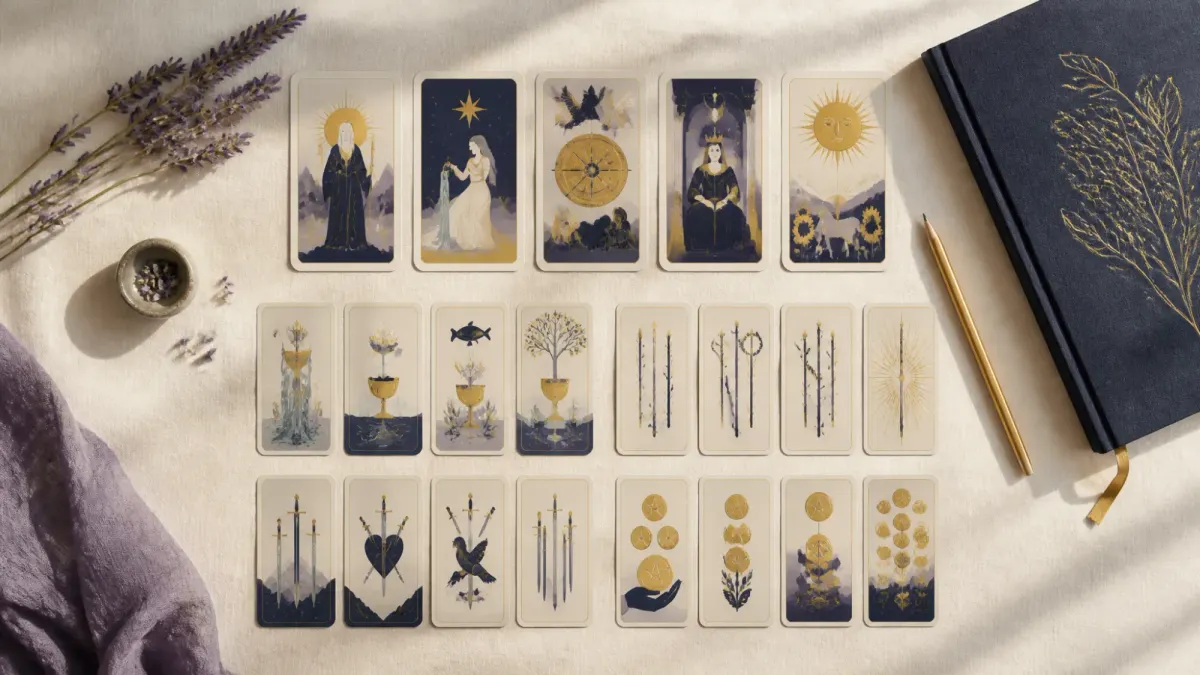
What is the difference between the Major Arcana and Minor Arcana in tarot? A standard tarot deck has 78 cards: 22 Major Arcana cards and 56 Minor Arcana cards. The Major Arcana points to broad life themes, meaningful transitions, and archetypal patterns. The Minor Arcana shows how those themes appear through everyday emotions, decisions, relationships, work, and practical circumstances.
Neither group is “better” or automatically more important. A Minor Arcana card can describe a deeply significant experience, while a Major Arcana card still needs to be read in the context of the question, spread position, and surrounding cards.
Major Arcana vs. Minor Arcana at a glance
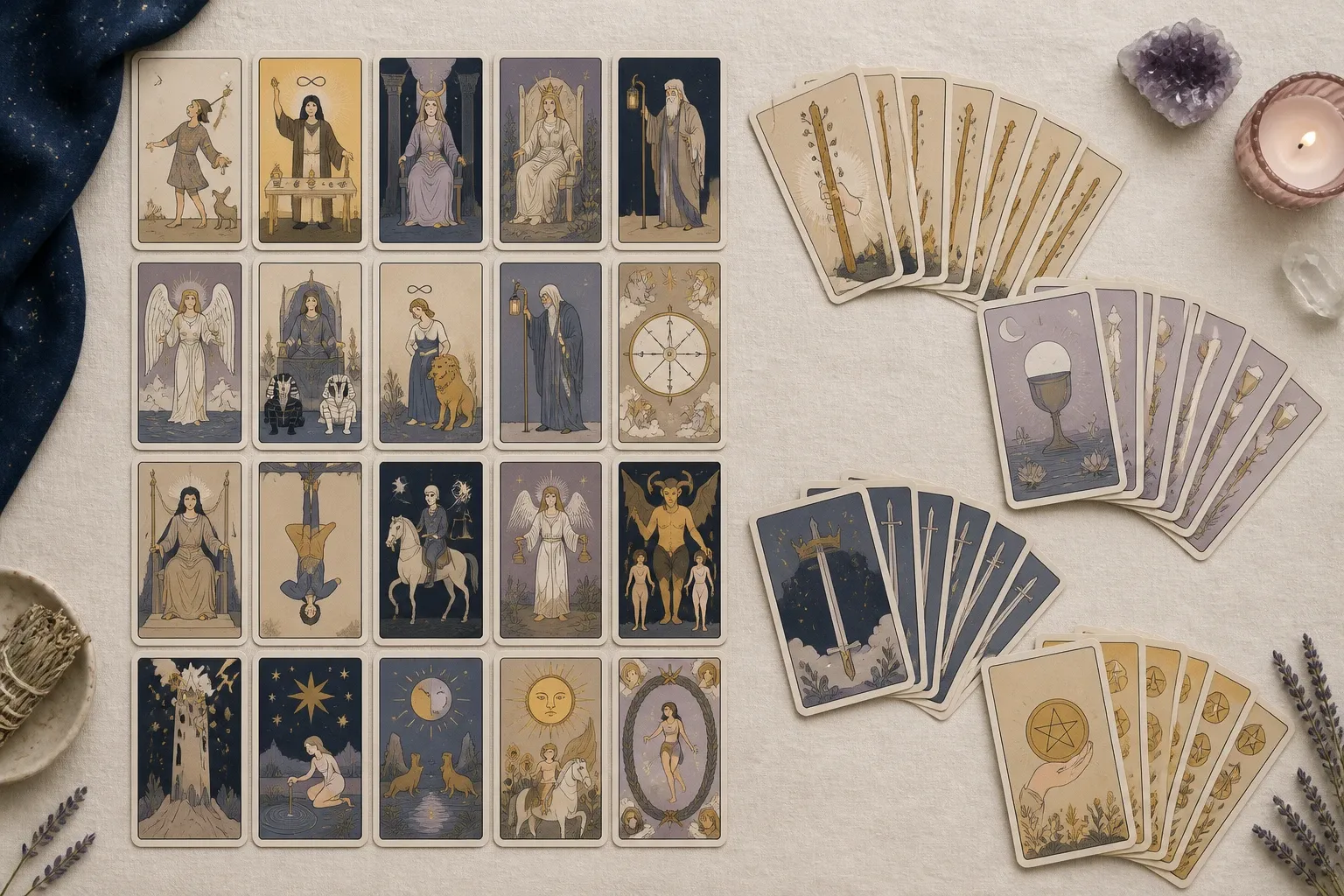
- Major Arcana: 22 cards, usually numbered 0 through 21.
- Minor Arcana: 56 cards divided into four suits, with 14 cards in each suit.
- Major cards: emphasize larger lessons, turning points, and archetypal experiences.
- Minor cards: emphasize day-to-day actions, feelings, thoughts, resources, and choices.
- In a reading: Major cards often frame the central theme, while Minor cards add detail and show how that theme may be experienced.
What is the Major Arcana?
The Major Arcana begins with the Fool, usually numbered 0, and continues through 21 cards to the World. Familiar cards include the Magician, High Priestess, Lovers, Hermit, Wheel of Fortune, Death, Tower, Star, Moon, Sun, and World.
Readers sometimes describe this sequence as the Fool’s Journey: a symbolic path through beginnings, learning, challenge, change, integration, and completion. You do not need to memorize that journey to read the cards, but it can help you see how each Major Arcana card represents a recognizable human experience.
When a Major Arcana card appears, it may suggest that the spread position carries extra thematic weight. For example, the Hermit can invite reflection or a quieter search for understanding, while the Wheel of Fortune can highlight changing circumstances or cycles. This does not guarantee a dramatic event or fixed outcome; the card’s meaning still depends on context.
What is the Minor Arcana?
The Minor Arcana contains 56 cards organized into four suits. Each suit usually includes an Ace through Ten plus four court cards: Page, Knight, Queen, and King. Some decks rename the suits or court cards, but the underlying structure is often similar.
If the Major Arcana describes the larger chapter, the Minor Arcana often describes the scenes within it. These cards can reflect a conversation, emotional reaction, new idea, practical task, conflict, habit, resource, or next step. Their everyday focus does not make them less meaningful; daily choices are often where larger patterns take shape.
The four Minor Arcana suits
- Wands: energy, creativity, motivation, ambition, and action.
- Cups: emotions, relationships, intuition, connection, and imagination.
- Swords: thought, communication, tension, truth, and decisions.
- Pentacles: work, resources, money, the body, routines, and material life.
Suit meanings are helpful starting points, not rigid rules. A card can take on a different emphasis depending on the artwork, the question, its position in the spread, and the cards around it.
Five key differences between the Major and Minor Arcana
1. Number of cards
The Major Arcana has 22 cards. The Minor Arcana has 56 cards, making it the larger part of a standard 78-card tarot deck.
2. Structure
The Major Arcana follows a numbered sequence of individual archetypes. The Minor Arcana is divided into four suits, and each suit follows a repeating pattern from Ace through Ten and the court cards.
3. Focus
Major Arcana cards tend to describe broad themes such as beginnings, choice, solitude, transformation, hope, or completion. Minor Arcana cards tend to describe how life is unfolding through particular feelings, thoughts, actions, relationships, and practical conditions.
4. Emphasis in a spread
A Major Arcana card may draw attention to the larger lesson or transition connected to a spread position. Minor Arcana cards often supply the concrete details. This is a difference in emphasis, not a rule that one card overrides another.
5. Reading patterns
Several Major Arcana cards can make a reading feel strongly centered on a personal theme or period of change. Several cards from one Minor Arcana suit can show where energy is concentrated—for example, many Cups may emphasize emotional or relational questions.
How the Major and Minor Arcana work together
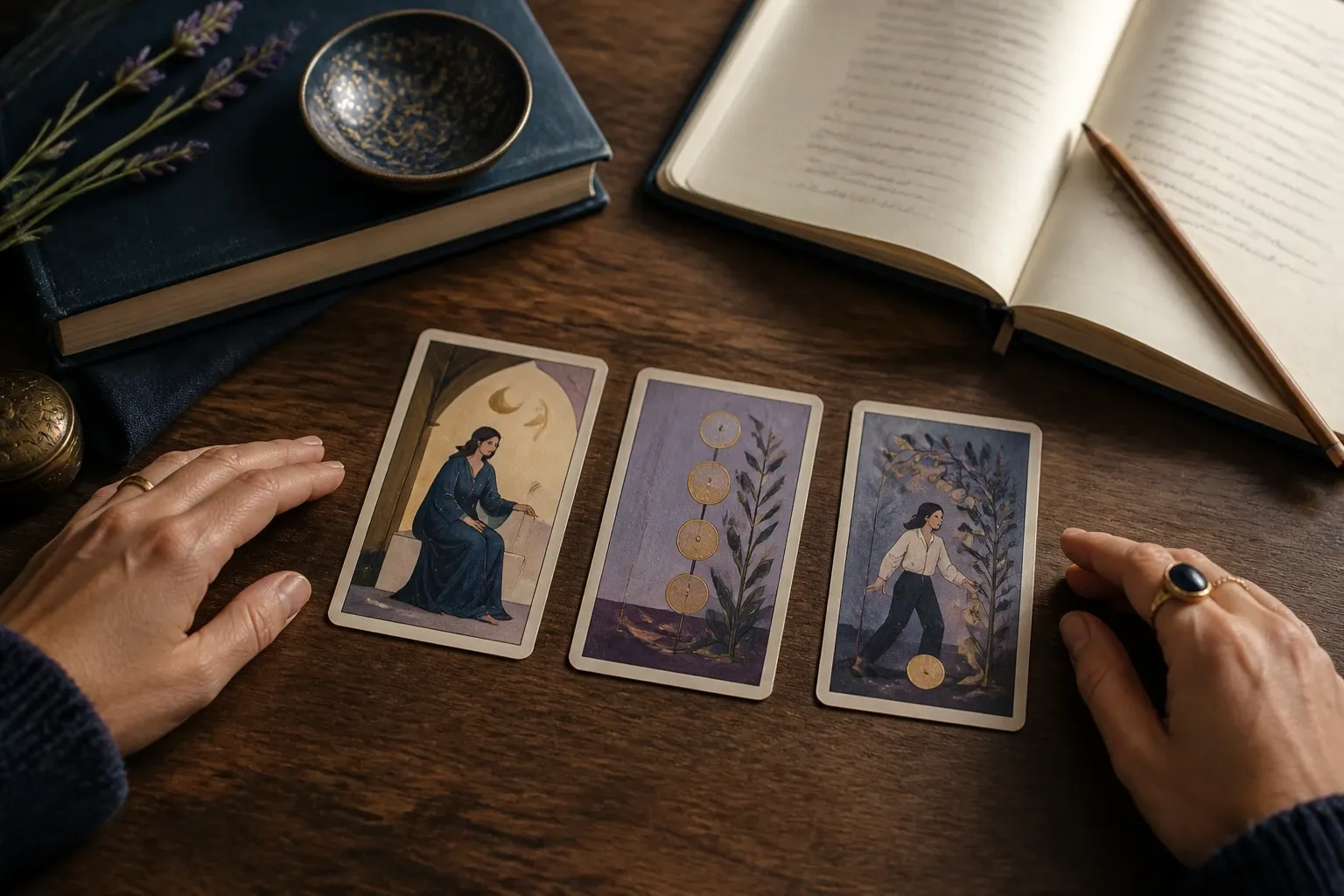
Imagine a spread about changing jobs. A Major Arcana card such as the Fool might frame the experience as a new beginning that asks for openness and thoughtful courage. A Three of Pentacles could point to collaboration or skill-building, while a Two of Swords could reflect uncertainty about a decision.
The Major card establishes a broad theme; the Minor cards show how that theme is being lived. Read every card in its spread position, then look for repeated suits, numbers, figures, symbols, and visual directions. The relationship between the cards is usually more useful than treating one card as the single “answer.”
How to interpret Major and Minor Arcana cards
- Return to the question. A clear, open-ended question gives the reading a useful frame.
- Read the spread position. The same card can feel different in a position about a challenge, resource, or possible next step.
- Notice which group appears. Ask whether the reading leans toward broad themes, everyday details, or a combination of both.
- Look for patterns. Repeated suits, numbers, court cards, or Major Arcana cards can reveal emphasis.
- Combine the message. Describe the larger theme, the practical or emotional details, and one grounded reflection or action to consider.
Frequently asked questions
Are Major Arcana cards more important than Minor Arcana cards?
No. Major Arcana cards often carry broader symbolic weight, but Minor Arcana cards can describe experiences that matter deeply. Read the card in relation to the question and the rest of the spread.
What does it mean if a reading has many Major Arcana cards?
It may suggest that the reading is strongly focused on a central life theme, a period of learning, or a meaningful transition. It is an invitation to pay attention, not proof that a dramatic or predetermined event will occur.
What if a reading has no Major Arcana cards?
A spread made entirely of Minor Arcana cards may emphasize immediate circumstances, habits, conversations, feelings, or choices. The reading is not less valuable; it may simply be asking you to work with what is practical and present.
Are court cards part of the Minor Arcana?
Yes. The Page, Knight, Queen, and King belong to the Minor Arcana. Depending on the reading style and context, they can represent people, roles, approaches, qualities, or stages of development.
A simple practice for beginners
Separate the Major and Minor Arcana, then draw one card from each pile. Describe the Major card’s broader theme first. Next, ask how the Minor card makes that theme concrete: What feeling, action, conversation, or resource does it introduce?
Write two or three sentences that connect the cards without forcing a prediction. When you are ready to add more positions, try one of these easy tarot spreads for beginners.
A grounded approach to tarot
Tarot can support reflection, curiosity, and self-awareness, but it is not a source of certainty. Use the cards alongside your own judgment, context, and lived experience. A tarot reading cannot replace medical, legal, financial, mental-health, or other professional advice.
Keep learning with Astrological Insights
Explore the tarot learning hub or continue with Tarot for Beginners for a clear path through card meanings, simple spreads, and reflective reading.
Join the free weekly newsletter for one practical astrology note, one tarot reflection prompt, and the newest beginner guide.