
12 Best Tarot Decks for Insightful Daily Readings
Find a tarot deck that supports your intuition, reflects your reading style, and helps you build a meaningful daily practice—from classic Rider-Waite-Smith imagery to modern, culturally grounded and dreamlike decks.
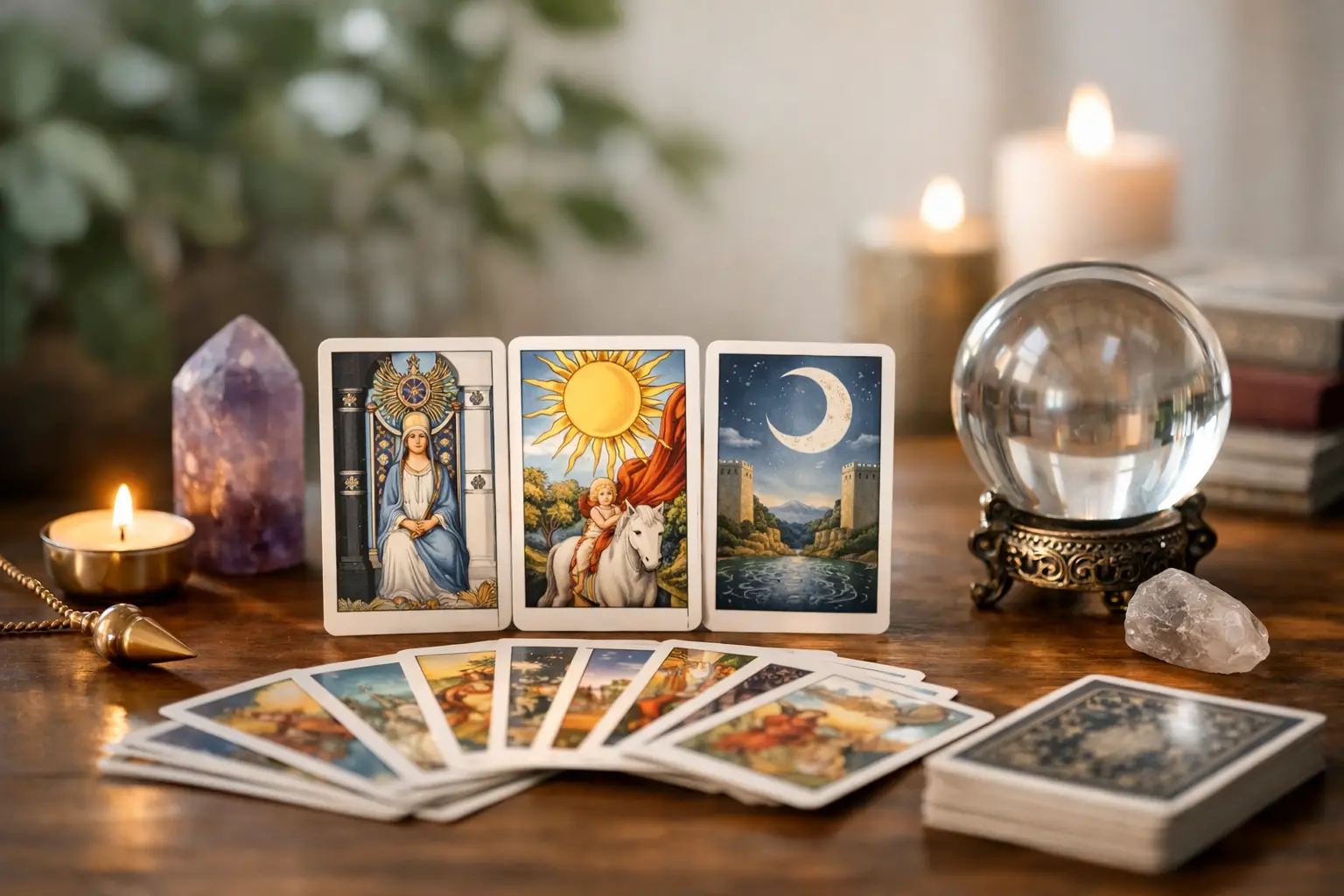
A tarot deck becomes meaningful when its images give your intuition an honest place to land. The best tarot decks are not necessarily the rarest, most elaborate, or most mystical-looking options. They are the decks whose symbols help you name what is moving through your relationships, work, inner life, and next decision.
For a first deck, familiarity matters. For an established reader, fresh imagery can reveal something new in a card you thought you already knew. The right choice depends on whether you want to learn traditional tarot structure, connect with a particular artistic world, or create a daily ritual that feels personal and grounding.
What Makes a Tarot Deck Worth Reading With?
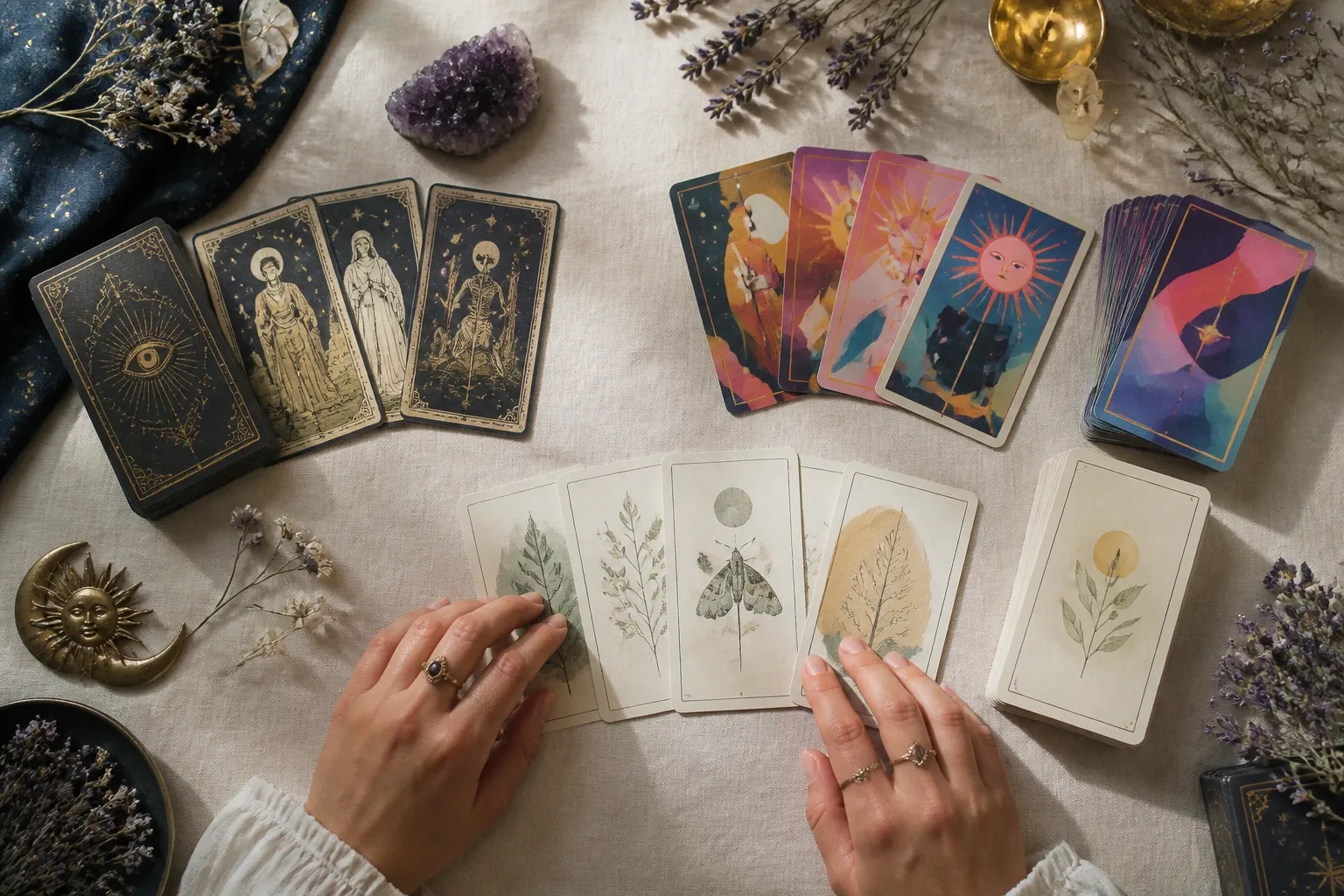
A traditional tarot deck has 78 cards: 22 Major Arcana cards that speak to significant life passages and 56 Minor Arcana cards that illuminate everyday feelings, choices, challenges, and momentum. A useful deck makes both layers readable. You should be able to sense the emotional atmosphere of a card before reaching for a guidebook.
Look closely at the Minor Arcana before choosing a deck. Some decks show fully illustrated scenes for every card, while others use more symbolic arrangements of cups, wands, swords, and pentacles. Illustrated scenes are often easier for beginners because the Five of Cups can immediately feel like grief or disappointment, while the Eight of Pentacles can show the quiet focus of learning a craft.
Artwork matters, too. Tarot asks you to return to the same symbols across changing seasons of your life. Choose imagery that feels inviting rather than merely impressive. A deck can be beautiful and still not be your deck if its figures, colors, or emotional tone keep you at a distance.
12 Best Tarot Decks for Different Reading Styles
1. Rider-Waite-Smith Tarot
The Rider-Waite-Smith Tarot is a clear foundation for learning classic tarot. Its visual language informs countless modern decks and most beginner tarot resources. The scenes are direct, sometimes stark, and rich with details that reveal more over time. If you want to understand the traditional meanings behind cards such as The Lovers, Death, or the Ten of Swords, begin here.
2. Smith-Waite Centennial Tarot Deck
This edition honors the original Pamela Colman Smith artwork with softer, more historic coloring. It has the same core symbolism as the Rider-Waite-Smith deck, but its muted palette can feel gentler and more intimate. It is a strong choice for readers who love tradition but prefer a quieter visual atmosphere.
3. Modern Witch Tarot Deck
The Modern Witch Tarot keeps the recognizable Rider-Waite-Smith structure while placing contemporary, diverse figures at the center of the story. Its cards feel especially supportive when you are reading about identity, friendship, dating, ambition, and boundaries in present-day life. The imagery is bold without losing the original symbolism that makes tarot easier to learn.
4. Light Seer's Tarot
The Light Seer's Tarot is luminous, expressive, and emotionally immediate. It balances uplifting imagery with an honest acknowledgment of shadow work, making it helpful for readings about healing, self-worth, and personal transformation. The card meanings remain close enough to traditional tarot that beginners can learn with it, though its intuitive style may invite more feeling-based interpretation.
5. Everyday Tarot Mini Tarot Deck
Small enough to travel with, the Everyday Tarot is a practical companion for a morning card pull or a quick moment of reflection before a meeting. Its clean illustrations make the deck approachable, and its compact format encourages consistency. The trade-off is size: readers with vision or dexterity concerns may find standard cards more comfortable.
6. The Wild Unknown Tarot
The Wild Unknown Tarot speaks through animals, landscapes, branches, feathers, and elemental color. It can feel especially resonant when you are seeking a quieter relationship with your instincts or moving through a period when words have not fully caught up with your feelings. Its symbolism is less literal than Rider-Waite-Smith imagery, so it may be more rewarding after you know a few tarot basics.
7. Tarot of the Divine
Tarot of the Divine draws from folktales, legends, and mythology from many cultures. Each card carries the feeling of a story already in motion, which can be powerful when you are asking about patterns, choices, and the role you are playing in your own life. Take time with its companion material so the references are approached with context and respect.
8. This Might Hurt Tarot
This Might Hurt Tarot is vivid, direct, and emotionally candid. Its modern figures and clear scenes make difficult cards feel less abstract. When a reading brings up conflict, exhaustion, grief, or a boundary you have delayed setting, this deck does not turn away from the truth. At the same time, it holds space for agency, recovery, and a more authentic next step.
9. Cosmic Slumber Tarot
The Cosmic Slumber Tarot has a dreamlike, surreal quality that suits nighttime journaling and readings about the subconscious. Its artwork can bring forward themes that are hard to explain logically but easy to recognize in the body: longing, creative restlessness, nostalgia, or a sense of transition. It is ideal when you want tarot to feel like entering an inner landscape.
10. Ethereal Visions Illuminated Tarot Deck
With Art Nouveau-inspired imagery and decorative gold details, Ethereal Visions brings romance and beauty to a traditional tarot framework. It can be a lovely choice for readers drawn to Venusian themes of art, love, pleasure, and value. Its visual elegance is part of the experience, so it may feel less practical for readers who want a stripped-down, highly literal deck.
11. Prisma Visions Tarot
Prisma Visions offers a striking panorama effect when cards from the same suit are placed together. That design helps you see each suit as an unfolding emotional or practical journey rather than 14 separate meanings. It is especially useful for readers who enjoy laying out several cards and noticing the larger pattern behind a question about career direction, a relationship, or creative purpose.
12. African American Tarot
African American Tarot offers culturally grounded imagery while following a familiar tarot structure. Representation can change the feeling of a reading in a profound way: you may see family, resilience, celebration, grief, and spiritual strength reflected with greater closeness. It is a meaningful option for anyone who wants a deck that expands whose stories are visibly held within tarot.
How to Choose Your First Tarot Deck
If you are new to tarot, begin by deciding what kind of relationship you want with the cards. A Rider-Waite-Smith-based deck is usually the easiest path if you plan to use books, classes, or online card meanings, because the imagery will be familiar. A more artistic or intuitive deck may be the better choice if a traditional deck feels emotionally flat to you. For more foundational guidance, explore this tarot guide for beginners.
Ask yourself a simple question: would I want to sit with these images when I am uncertain? Your deck does not need to look cheerful all the time. Tarot includes endings, disappointment, fear, change, and the complicated work of becoming yourself. But it should make you feel accompanied, not judged.
Consider the physical experience as well. Standard-size cards are easier to shuffle and study, while mini decks work well for travel. Matte finishes can reduce glare, and thicker cardstock may hold up better if you read often. If you are buying a deck for someone else, a classic deck with a clear guidebook is usually the most generous place to begin.
Let Your Deck Become a Daily Compass

You do not need an elaborate tarot spread to begin. Each morning, shuffle slowly and ask, “What energy deserves my attention today?” Pull one card, notice the first detail that catches your eye, then read its traditional meaning. Let both forms of guidance speak to each other.
A thoughtful question gives your daily pull direction. Instead of asking only what will happen, you might ask what deserves your attention, where your energy is going, or what would help you meet the day with greater clarity. When you want to deepen this practice, these better tarot questions can help you approach the cards with intention.
A card like the Two of Pentacles may arrive when your schedule is crowded, inviting you to consider what can be rearranged. The Queen of Cups can point to emotional sensitivity that needs care rather than suppression. The Tower does not demand fear. It brings attention to a structure that is already too strained to hold, so you can meet necessary change with greater awareness.
Keep a small record of your pulls, especially when a card repeats. Repetition is often tarot’s way of drawing a circle around a lesson that is still unfolding. Over time, your chosen deck becomes more than a collection of images. It becomes a trusted visual language for navigating life with greater clarity, one honest question at a time.