
How to Do a One-Card Tarot Reading for Today
Learn how to use a one-card tarot reading for daily guidance, from asking a focused question to interpreting imagery, reversals, and difficult cards with clarity and compassion.
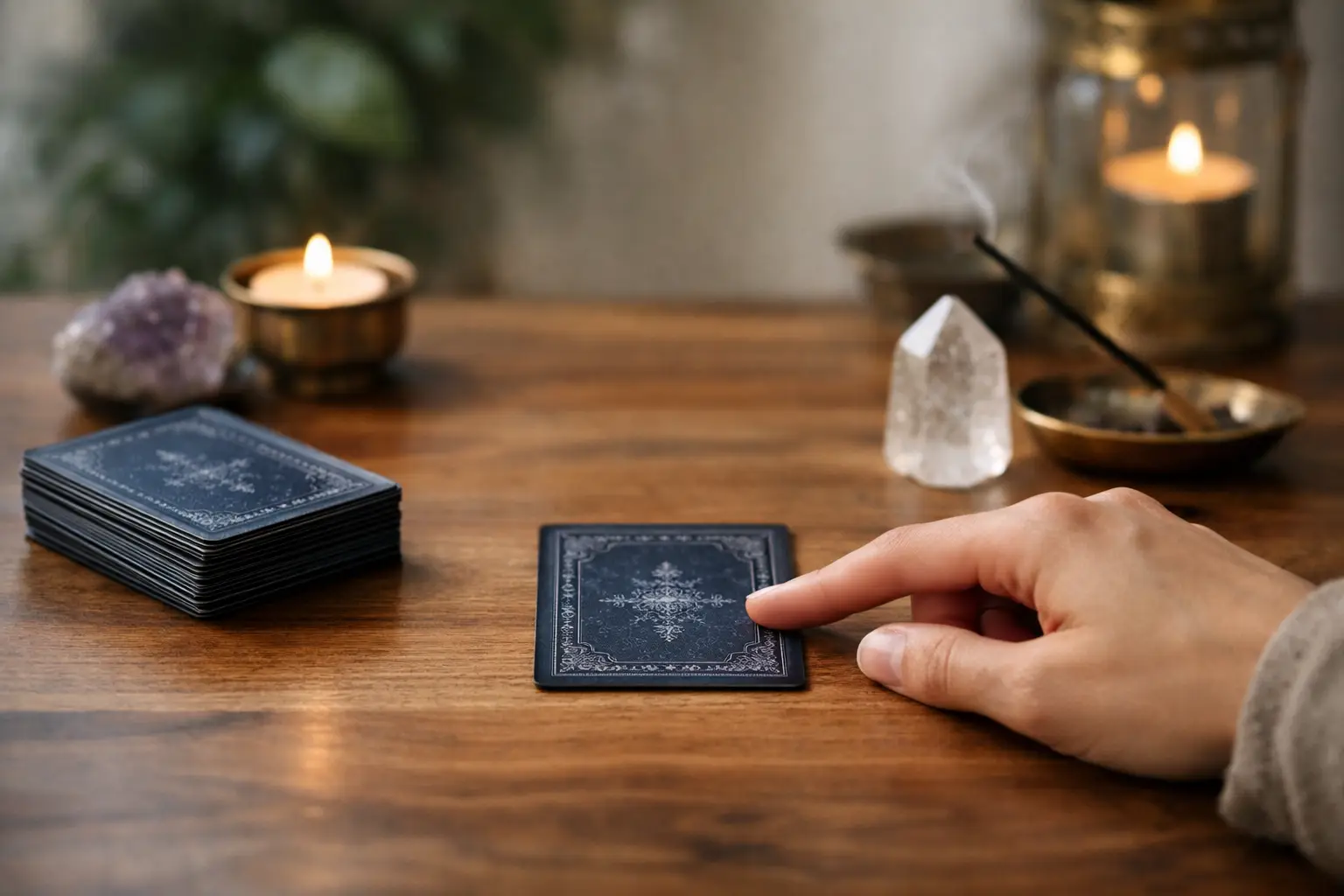
A single tarot card can meet you precisely where you are. When your thoughts are circling a relationship, a work decision, or an emotion you cannot quite name, a one-card pull creates a quiet point of focus. You do not need a complicated spread or years of study to receive meaningful guidance. Learning how to do a one-card tarot reading begins with presence: one honest question, one card, and a willingness to listen beneath the surface.
Why a One-Card Tarot Reading Can Be Powerful
A one-card tarot reading is not a lesser version of a larger spread. Its strength is its simplicity. With one image and one message to consider, you have room to notice your immediate reaction, the details of the card, and the pattern it reflects in your life.
This practice is especially helpful when you want guidance without becoming overwhelmed. A Celtic Cross may illuminate a long, layered situation, but it can also be more information than you need before a busy morning or difficult conversation. One card offers a theme to carry with you. It can reveal the energy surrounding your day, the lesson within a challenge, or the most supportive way to approach what is unfolding.
Tarot does not ask you to surrender your judgment. It helps you bring your inner knowing into view. The card may affirm what you have sensed, reveal a blind spot, or invite a gentler perspective on something that feels urgent.
How to Do a One-Card Tarot Reading Step by Step
Create a Small Moment of Stillness
You do not need candles, crystals, or a perfectly silent room, although any ritual that helps you settle can be supportive. Sit somewhere you can give yourself a few uninterrupted minutes. Place your tarot deck in front of you, take a slow breath, and let your attention return to the present.
If your day feels emotionally charged, name that silently before you begin. You might say, “I am feeling uncertain about this connection,” or “I am carrying pressure around work.” Naming your state does not distort the reading. It gives your intuition a clear place to begin.
Ask a Question with Room for Guidance
The quality of your question shapes the usefulness of your reading. Tarot works best with questions that invite reflection rather than demand a fixed yes-or-no outcome. Instead of asking, “Will I get the job?” try, “What energy should I bring to this job opportunity?” Instead of asking, “Does my partner love me?” ask, “What do I need to understand about this relationship right now?”
For a daily pull, keep it beautifully simple: “What guidance do I need today?” You can also ask what is asking for your attention, what strength will serve you, or how to navigate a particular feeling with greater clarity.
A focused question is helpful, but do not force one when your heart is scattered. You may simply ask for the message most meant for you. Tarot can meet you there, too.
Shuffle with Your Intention in Mind
Hold the question gently as you shuffle. There is no required method. You can shuffle like a playing-card deck, mix the cards face down on a table, or cut the deck into piles and bring them back together. Choose the method that feels natural enough that you can stay connected to your intention.
Some readers stop when a card jumps out. Others draw only after they feel a subtle inner sense of completion. Neither approach is more spiritually correct. Consistency matters less than being present rather than rushing through the motion.
When you are ready, draw one card. Place it face up in front of you and resist the impulse to immediately reach for a guidebook.
Notice Your First Response
Before interpreting traditional meanings, look closely at the image. What stands out first? A color, expression, landscape, animal, symbol, or direction of movement may hold the doorway into your reading. Pay attention to what you feel in your body as well. Relief, resistance, curiosity, grief, and recognition are all forms of information.
If you pull the Three of Swords while asking about a friendship, you may first notice the rain or the pierced heart. The card may point to hurt that needs honest acknowledgment, not necessarily an ending. If you draw the Sun during a period of self-doubt, its warmth may remind you that visibility and joy are safe to receive.
Your first response is not the entire interpretation, but it is often deeply personal. Let the card speak in its own visual language before you consult its established symbolism. If you are still learning the deck, a guide to tarot card meanings for beginners can help you build confidence without replacing your intuitive response.
Connect the Card to Your Question
Now bring together three things: your question, your instinctive response, and the card’s core meaning. The Major and Minor Arcana offer different layers of perspective. Major Arcana cards, such as the Hermit, Death, or the Star, often highlight larger inner lessons, turning points, or spiritual themes. Minor Arcana cards tend to speak more directly to daily experiences involving emotions, thoughts, resources, responsibilities, and action.
The suit can offer another layer of clarity. Cups relate to feelings, relationships, and intuition. Wands bring forward passion, creativity, courage, and momentum. Swords speak to the mind, communication, conflict, and truth. Pentacles address the material world, including work, money, health, home, and stability.
Suppose you ask how to approach an upcoming conversation and draw the Queen of Swords. Her guidance may be to speak clearly, honor your boundaries, and avoid softening a truth simply to keep the peace. If you ask what your career needs and draw the Eight of Pentacles, the message may be to return to your craft, practice patiently, and value steady progress over instant recognition.
Write down a few sentences about what the card seems to be showing you. A tarot journal helps you see how certain cards return during particular seasons of growth. Over time, your deck becomes a record of your spiritual journey and the wisdom you have gathered along the way.
Reading Reversed Cards in a One-Card Pull
If you use reversals, a reversed card does not automatically mean something negative. It can indicate blocked energy, an inward process, a delay, a need to reconsider, or an aspect of the card that requires conscious attention.
For example, an upright Chariot may encourage focused movement and self-direction. Reversed, it might ask where competing desires are pulling you off course. A reversed Ace of Cups may suggest that emotional renewal begins by tending to feelings you have held back.
If reversals make you feel intimidated, set them aside for now. Read every card upright until you feel more familiar with the deck. The goal is not to memorize every possible definition. It is to develop a clear, trusting relationship with tarot symbolism.
When the Card Feels Confusing or Difficult
Some cards arrive with immediate clarity. Others feel mysterious, uncomfortable, or strangely unrelated to your question. Do not treat confusion as failure. A difficult card often asks for time, especially when it touches a truth you are still approaching.
When you pull a card like the Tower, Ten of Swords, or Five of Pentacles, avoid turning its imagery into a fearful prediction. These cards can bring forward disruption, exhaustion, loss, exclusion, or a belief that support is unavailable. Their guidance is often practical: recognize what is no longer sustainable, ask for help, rest, or make space for a necessary change.
Rather than drawing repeatedly until you receive a more comforting card, sit with the first one. Ask yourself, “What is this card asking me to face with compassion?” If you truly need more context, pull one clarifying card with a specific purpose, such as, “What will help me work with this energy?” Keep the original card at the center of the reading.
Make One-Card Tarot Part of Your Daily Practice
A daily tarot ritual can take less than five minutes. Pull a card in the morning to set an intention, then return to it in the evening. Notice where its theme appeared in a conversation, a choice, a mood, or an unexpected opportunity. This is where tarot becomes less about finding a perfect answer and more about navigating life with greater clarity.
You do not have to pull a card every day. During intense seasons, daily guidance can feel grounding. At other times, a weekly card or a reading before an important decision may be more supportive. Let the practice serve your life rather than become another obligation.
Keep your question sincere, let the image meet you honestly, and carry its message into one small choice. The card you draw today may not tell you everything, but it can illuminate the next faithful step.